
Solid Surface Worktops vs Quartz: Which Is Best for Your Kitchen? (UK Guide).
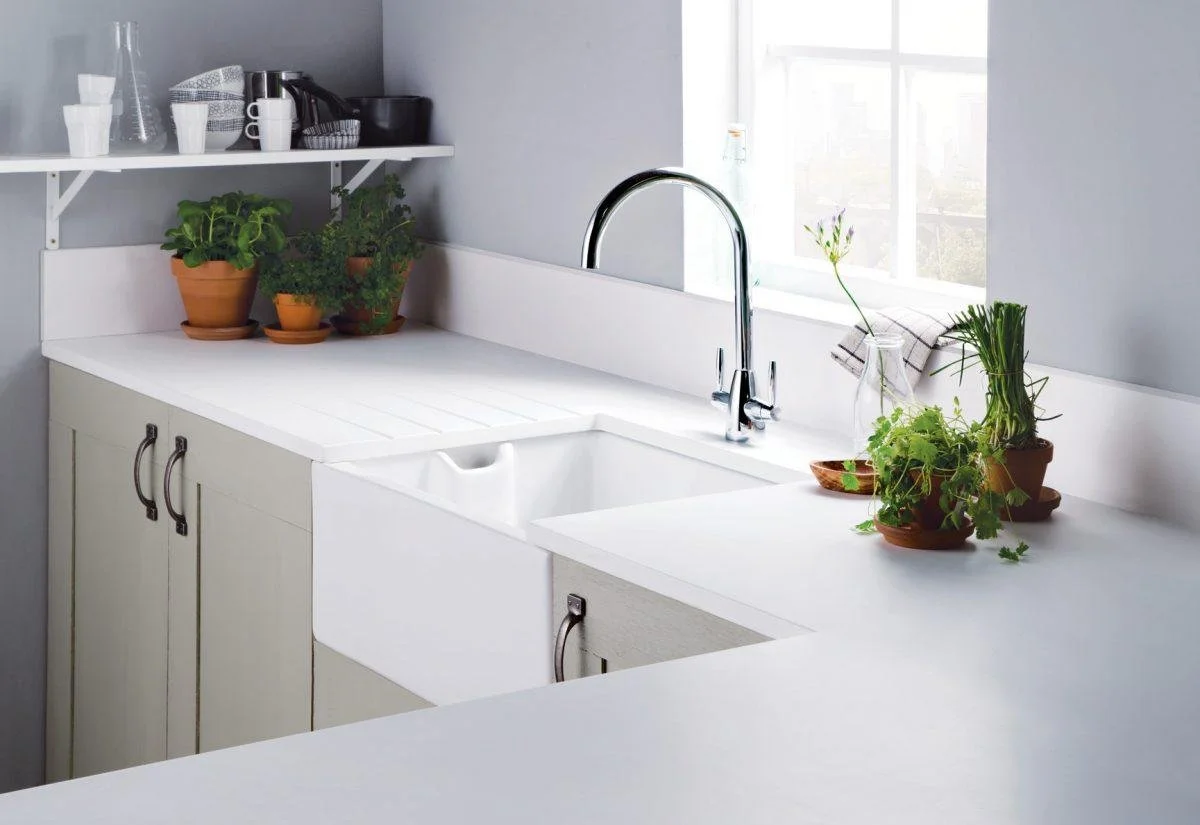
Thinking about new kitchen worktops but not sure what to choose?
Solid surface worktops have become one of the most popular options in modern kitchens—but how do they compare to quartz, and are they worth the investment?
In this guide, we break down:
What solid surface worktops are
How they compare to quartz
Real-world pros and cons
Typical costs in the UK
Which option is best for your kitchen
What Are Solid Surface Worktops?
Solid surface worktops (such as Corian or similar materials) are man-made surfaces designed to give a seamless, smooth finish.
Unlike stone, they can be:
Joined with almost invisible seams
Shaped and moulded
Integrated with sinks and upstands
This makes them a favourite for clean, modern kitchen designs.
Solid Surface vs Quartz: What’s the Difference?
Solid Surface (Corian-style)
Seamless joins
Can be repaired and refinished
Warm, smooth feel
Slightly softer material
Quartz
Extremely hard and durable
Natural stone appearance (especially veined styles)
More resistant to scratches
Visible joins
👉 Real-world insight:
In actual installations, solid surface tends to outperform quartz around sinks and awkward corners, where seamless joints and flexibility make a noticeable difference.
Pros of Solid Surface Worktops
✔ Seamless finish (no visible joins)
✔ Integrated sinks and draining grooves
✔ Fully repairable (scratches can be sanded out)
✔ Hygienic and non-porous
✔ Great for modern and minimalist kitchens
Cons to Consider
✖ Not as hard as quartz (can scratch if abused)
✖ Less natural-looking than stone
✖ Requires a skilled fabricator for best results
How Much Do Solid Surface Worktops Cost in the UK?
Typical price ranges:
Supply only: £300–£600 per metre
Fully installed: £1,500 – £3,500+ depending on size and detailing
Costs vary depending on:
Colour and brand
Thickness
Integrated features (sinks, grooves, upstands)
Complexity of the layout
👉 In many cases, solid surface sits slightly below premium quartz—but offers more flexibility in design.
When Is Solid Surface the Best Choice?
Solid surface is ideal if you want:
A seamless, high-end finish
Integrated sink and worktop in one piece
A clean, modern look
A worktop that can be repaired over time
When Quartz Might Be Better
Quartz is often the better option if:
You want a natural stone look
Maximum scratch resistance is a priority
You prefer bold veining and patterns
Our Experience Installing Worktops
Across projects in Sussex and London, solid surface is one of the most versatile materials we work with.
It allows us to:
Create completely seamless runs
Integrate sinks and details cleanly
Achieve a high-end finish without the cost of premium stone
When fabricated and installed properly, it’s one of the most forgiving and long-lasting options available.
Final Thoughts
Both solid surface and quartz are excellent choices—but they suit different priorities.
If you value:
Seamless design
Flexibility
Repairability
👉 Solid surface is hard to beat.
Thinking About Upgrading Your Worktops?
At Oak & Stone Kitchens, we design, manufacture, and install bespoke kitchens and worktops across Sussex and London.
If you’re considering a new kitchen or simply upgrading your worktops, we’re happy to help you explore the best options for your space.
Get in touch for a design consultation and quote.
